

Affiliate disclosure: This post may contain affiliate links. If you purchase through one of these links, I may earn a commission at no additional cost to you. Read my full Affiliate Disclosure.
Building an email list for affiliate marketing gives you something a single social-media post, advertisement, or search visit cannot provide: an opportunity to continue helping people after their first visit.
That does not mean collecting as many email addresses as possible or sending subscribers one promotion after another.
A useful email list for affiliate marketing begins with the right audience, a legitimate reason to subscribe, and follow-up that continues the conversation.
CBPW Quick Answer: To build an email list for affiliate marketing, identify the audience you want to help, create a useful reason for them to subscribe, build a simple opt-in path, deliver what you promised, send helpful follow-up emails, introduce relevant affiliate offers when appropriate, and track what subscribers actually respond to.
The goal is not simply to own a list of email addresses.
The goal is to build a communication channel with people who have chosen to hear from you.
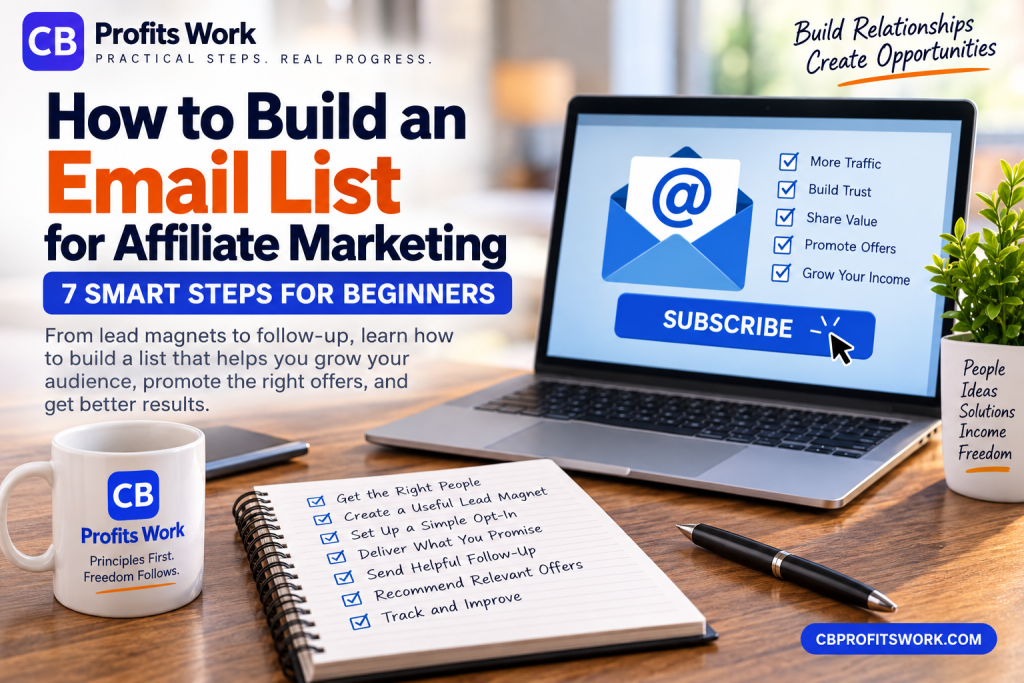
Here are seven practical steps for building an email list for affiliate marketing around that principle.
Why Build an Email List for Affiliate Marketing?
Affiliate marketers often depend heavily on traffic sources they do not control.
A search engine can change its rankings. Advertising costs can increase. A social platform can reduce your reach or change its rules.
An email list for affiliate marketing does not eliminate those risks, but it changes what happens after someone reaches you.
Instead of every visit becoming a one-time opportunity, an interested visitor can choose to stay connected.
That creates opportunities to:
- Continue teaching
- Answer common questions
- Share new resources
- Build familiarity and trust
- Introduce appropriate affiliate solutions
- Bring subscribers back to useful content
- Learn which topics interest your audience
CBPW List-Building Principle: Traffic introduces people to your business. An email list gives interested people a way to continue the relationship.
That distinction is important.
You are not trying to trap visitors in a funnel. You are giving the right visitors a reason to continue receiving useful information from you.
The CBPW Email Relationship Framework™
A practical email list for affiliate marketing can be built around seven connected pieces:
Audience → Reason → Capture → Delivery → Follow-Up → Recommendation → Measurement
Each piece has a job:
- Audience: Know who you are trying to help.
- Reason: Give them a worthwhile reason to subscribe.
- Capture: Make subscribing simple and clear.
- Delivery: Immediately provide what you promised.
- Follow-Up: Continue providing useful information.
- Recommendation: Introduce relevant affiliate solutions when they fit.
- Measurement: Learn what subscribers respond to and improve.
Let’s work through each step.
1. Start With the Audience You Want to Help
Before creating an opt-in form or signing up for another marketing tool, define who you want on the list.
A list of 1,000 people with little interest in your subject can be less useful than a much smaller list of people who genuinely care about the problems you discuss.
Ask yourself:
- Who is this email list intended to help?
- What problem brought these people to my website?
- What would they reasonably expect me to discuss?
- What information could help them make progress?
- What kinds of affiliate solutions might eventually fit those needs?
If this part is still unclear, start with our guide on finding your target audience for affiliate marketing.
Defining that audience first gives your email list for affiliate marketing a purpose beyond simply collecting subscribers.
CBPW Audience Rule: Do not build a list first and decide what to say later. Know who you are trying to help before asking them to subscribe.
2. Give People a Useful Reason to Subscribe
“Join my newsletter” may work when someone already knows and values your content.
A new visitor often needs a clearer reason.
One common approach is a lead magnet: a useful resource someone receives in exchange for joining your email list.
Examples include:
- A checklist
- A short guide
- A worksheet
- A template
- A resource list
- A mini-course
- A quick-start plan
The best lead magnet is not necessarily the longest or most impressive-looking resource.
It should solve a small, specific problem that matters to the same audience you intend to serve afterward.
For example, CB Profits Work uses an Affiliate Marketing Foundation Checklist because it connects directly to the problems our beginner affiliate-marketing content addresses.
That connection matters when building an email list for affiliate marketing. The reason someone joins should make sense alongside the information you plan to send afterward.
CBPW Lead-Magnet Rule: The purpose of a lead magnet is not merely to obtain an email address. It should begin the kind of helpful relationship you intend to continue.
3. Build a Simple Opt-In Path
You do not need an enormous funnel to start an email list for affiliate marketing.
A basic path can be:
Helpful Content → Opt-In Page or Form → Confirmation → Resource Delivery → Follow-Up
Your opt-in page should make several things clear:
- What the subscriber will receive
- Who the resource is intended for
- Why it may be useful
- What information you are requesting
- What happens after subscribing
Keep unnecessary friction low.
If you only need a first name and email address, asking for a mailing address, telephone number, company size, favorite color, and shoe size probably isn’t helping. 😄
More importantly, make sure the promise on the opt-in page matches what happens after the person subscribes.
CBPW Opt-In Rule: Make the promise clear before the subscription and fulfill it immediately afterward.
4. Deliver What You Promised
This step sounds obvious, but it establishes the tone of the relationship.
If someone subscribed for a checklist, deliver the checklist.
If you promised a five-day email course, send the course.
If you promised weekly practical affiliate-marketing guidance, your future emails should resemble that promise.
Do not make someone search through three promotional pages just to find the resource they requested.
The first interaction after subscribing should reinforce that giving you their email address was a reasonable decision.
For an email list for affiliate marketing, this first delivery also establishes an important expectation: subscribers should receive what you said they would receive before you begin asking them to consider anything else.
CBPW Delivery Rule: The first promise you make to a subscriber is your first opportunity to demonstrate whether your future promises deserve attention.
5. Create a Helpful Follow-Up Sequence
An email address becomes useful only when you have a reason to communicate.
A beginner follow-up sequence does not need dozens of emails.
It could begin with:
- Email 1: Deliver the promised resource and explain what comes next.
- Email 2: Help the subscriber understand an important problem.
- Email 3: Teach one practical step they can use.
- Email 4: Address a common mistake or misunderstanding.
- Email 5: Point them toward another useful resource.
- Email 6: Introduce an appropriate solution when it genuinely fits.
- Email 7: Ask or observe what they need next.
The exact sequence will depend on your audience and subject.
What matters is that the emails have a purpose beyond filling an autoresponder.
Some emails may educate. Some may send readers back to your website. Some may recommend a tool or product. Others may simply help subscribers understand the next step.
A good follow-up sequence turns an email list for affiliate marketing into an ongoing communication system instead of a collection of addresses waiting for the next promotion.
CBPW Follow-Up Rule: Every email should earn its place by helping the subscriber understand, decide, or do something useful.
6. Recommend Affiliate Products When They Fit the Conversation
Building an email list for affiliate marketing does eventually create opportunities to recommend products.
But the existence of a list does not make every product relevant.
Before introducing an affiliate offer, ask:
- Does this product address a problem we’ve already discussed?
- Does it fit this audience’s experience level?
- Can I explain why it may be useful?
- Have I made the affiliate relationship clear?
- Does the recommendation fit naturally into the subscriber’s journey?
If you need a framework for evaluating offers, see our guide on how to choose ClickBank products.
And remember that commercial email carries responsibilities beyond conversion rates. The FTC’s CAN-SPAM compliance guide for businesses explains requirements that apply to commercial email, including accurate sender information and subject lines, a valid postal address, an opt-out method, and honoring opt-out requests.
Those responsibilities should be part of the foundation of an email list for affiliate marketing, not something considered only after the list begins producing results.
CBPW Recommendation Rule: Having permission to email someone does not mean every email should become a promotion.
7. Measure What Subscribers Actually Do
You will not know whether your email list for affiliate marketing is helping your business merely by watching the subscriber count.
Subscriber growth matters, but it is only one measurement.
Depending on your email platform and campaign, useful indicators can include:
- New subscribers
- Unsubscribes
- Email clicks
- Traffic returning to your website
- Lead-magnet conversion rate
- Affiliate-link clicks
- Conversions or sales when trackable
- Which subjects repeatedly generate interest
Be careful about treating one number as the entire story.
A large list with little engagement is not automatically healthier than a smaller list whose subscribers consistently use your content.
Over time, the evidence from your email list for affiliate marketing should help you improve your lead magnet, content, follow-up, product recommendations, and understanding of your audience.
CBPW Measurement Rule: Do not measure the value of your email list only by how many people are on it. Measure whether the system is helping the right people take meaningful next steps.
What Should You Send to an Affiliate Marketing Email List?
Your emails should reflect why people joined.
A practical mix might include:
- Educational tips
- Answers to common questions
- New blog posts
- Checklists and resources
- Lessons from testing
- Product evaluations
- Relevant affiliate recommendations
- Updates that matter to your audience
Not every email needs to sell something.
In fact, if every message feels like another excuse to place an affiliate link in front of the reader, subscribers have little reason to keep paying attention.
Your content and email list for affiliate marketing should work together.
A blog post can attract the visitor. A useful resource can turn that visitor into a subscriber. Email can bring the subscriber back to additional content. And appropriate content can eventually introduce a relevant offer.
That creates a much healthier path than:
Traffic → Affiliate Link → Hope
Common Email List Building Mistakes
Trying to Attract Everyone
A broad list is not automatically a useful list.
Start with a defined audience and create resources for problems that audience actually has.
Creating a Lead Magnet Unrelated to Future Content
If people subscribe for one subject and then receive emails about something completely different, the original opt-in did not establish the right expectation.
Sending Promotions Without Enough Context
An affiliate link is more useful when the subscriber understands the problem, the potential solution, and why you are recommending it.
Collecting Subscribers Without a Follow-Up Plan
Building the list and then disappearing for three months makes it harder to establish a consistent relationship.
Watching Only Subscriber Count
A subscriber number tells you how many addresses are stored. It does not tell you whether the system is helping readers or producing meaningful business activity.
Frequently Asked Questions About Email Lists for Affiliate Marketing
Do I need an email list to start affiliate marketing?
No. You can begin affiliate marketing without an email list. However, building an email list for affiliate marketing can give interested visitors a way to stay connected instead of making every visit a one-time interaction.
How big should my email list be before promoting affiliate products?
There is no universal subscriber number that suddenly makes a recommendation appropriate. Relevance, audience fit, trust, and the quality of the recommendation matter more than reaching an arbitrary list size.
What should I offer people to join my email list?
Offer something useful to the audience you want to attract. A focused checklist, guide, worksheet, template, resource list, or short course can work when it solves a real problem and naturally connects to your future content.
How often should affiliate marketers email subscribers?
There is no single schedule that works for every audience. Choose a cadence you can maintain while continuing to send useful messages. Consistency and relevance are generally more important than sending as frequently as possible.
Should every email contain an affiliate link?
No. Some emails can teach, answer questions, share resources, or direct subscribers to useful content without containing an affiliate offer. Recommendations should appear when they genuinely fit the conversation.
Can I buy an email list for affiliate marketing?
Buying email addresses can create quality, compliance, reputation, and deliverability problems. A permission-based email list for affiliate marketing, built around people who deliberately choose to hear from you, gives you a clearer foundation for a long-term email strategy.
Build a Relationship, Not Just a Subscriber Count
A useful email list for affiliate marketing is not simply a database.
It is part of a larger system:
Audience → Reason → Capture → Delivery → Follow-Up → Recommendation → Measurement
Each step should prepare the subscriber for the next one.
Start with the right people. Give them a legitimate reason to subscribe. Deliver what you promised. Continue helping. Recommend products when they fit. Then use evidence to improve the process.
CBPW Final Principle: Do not build an email list merely so you have more people to promote to. Build a communication channel worth staying subscribed to.
If you’re still assembling the larger foundation around your content, traffic, offers, and follow-up, continue with our affiliate marketing business plan.
Affiliate marketing requires time, effort, testing, and ongoing learning. Traffic, leads, sales, commissions, profit, and income are not guaranteed.
For additional information, review the CB Profits Work Earnings Disclaimer and Affiliate Disclosure.
— Bobby Wiggins
CB Profits Work